
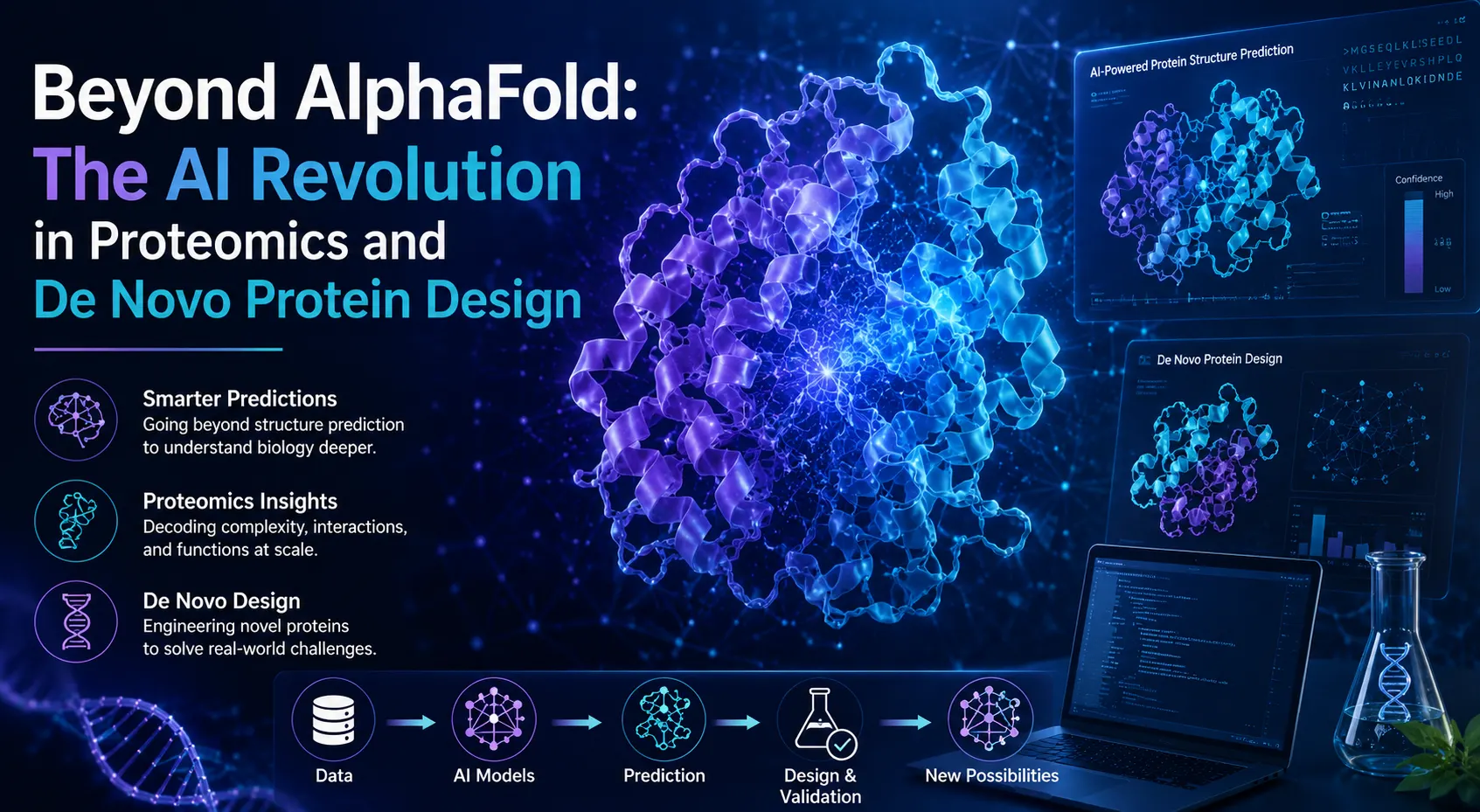
One of the greatest mysteries in biology—the protein folding problem—has reached a transformative resolution through deep learning algorithms. This article examines the impact of AlphaFold-3 on biomolecular interactions, the emergence of de novo protein design using diffusion models, and the academic implications of these technologies for biotechnological advancement in 2026.
Solving a 50-Year-Old Challenge
The fundamental dogma of biology—the flow from DNA to RNA to protein—long contained a molecular "black box" because the function of a protein cannot be fully understood without knowing its precise three-dimensional structure. Christian Anfinsen’s 1972 hypothesis, which stated that a protein's tertiary structure is determined solely by its amino acid sequence, became the "Holy Grail" of computational biology. As of 2026, the arrival of Google DeepMind’s AlphaFold-3 and its competitors (such as RoseTTAFold) has not only solved the folding of single chains but can now predict the structures of DNA, RNA, and complex ligands at atomic resolution. This leap has shifted the academic paradigm from "structural biology" to "design biology."
AlphaFold-3: Mapping the Interactome
While AlphaFold-2’s success was limited to predicting the structures of existing protein chains, the academic community’s real challenge lay in how these proteins interact with other molecules. The release of AlphaFold-3 in 2024 and its subsequent refinements in 2025 have increased the accuracy of predicting protein-nucleic acid interactions and small-molecule (drug-like ligand) binding sites by over 50%.
For academicians, this development serves as an exceptional "pre-screening" mechanism. Before committing to months of labor-intensive X-ray crystallography or Cryogenic Electron Microscopy (Cryo-EM), researchers can now simulate interactions in silico. Specifically, the ability to predict how post-translational modifications (such as phosphorylation or glycosylation) affect structural stability has revolutionized research in cancer biology and cellular signaling pathways.
De Novo Protein Design: Building What Nature Never Imagined
Perhaps more exciting than predicting existing structures is the ability to design new ones. Led by pioneers like David Baker, de novo protein design now utilizes "Diffusion Models"—the same logic behind generative AIs like Stable Diffusion. Tools such as "ProteinMPNN" and "RFdiffusion" allow scientists to create protein sequences from scratch to serve a specific purpose, such as an enzyme that degrades microplastics or a synthetic antibody that binds to a novel viral variant.
The academic workflow for de novo design typically follows these steps:
• Target Specification: Defining the surface the protein will bind to or the chemical reaction it will catalyze.
• Topology Generation: Diffusion models generate a 3D scaffold by "denoising" a random distribution of atoms into a structured backbone.
• Sequence Optimization: High-accuracy algorithms assign the optimal amino acid sequence to stabilize that specific 3D scaffold.
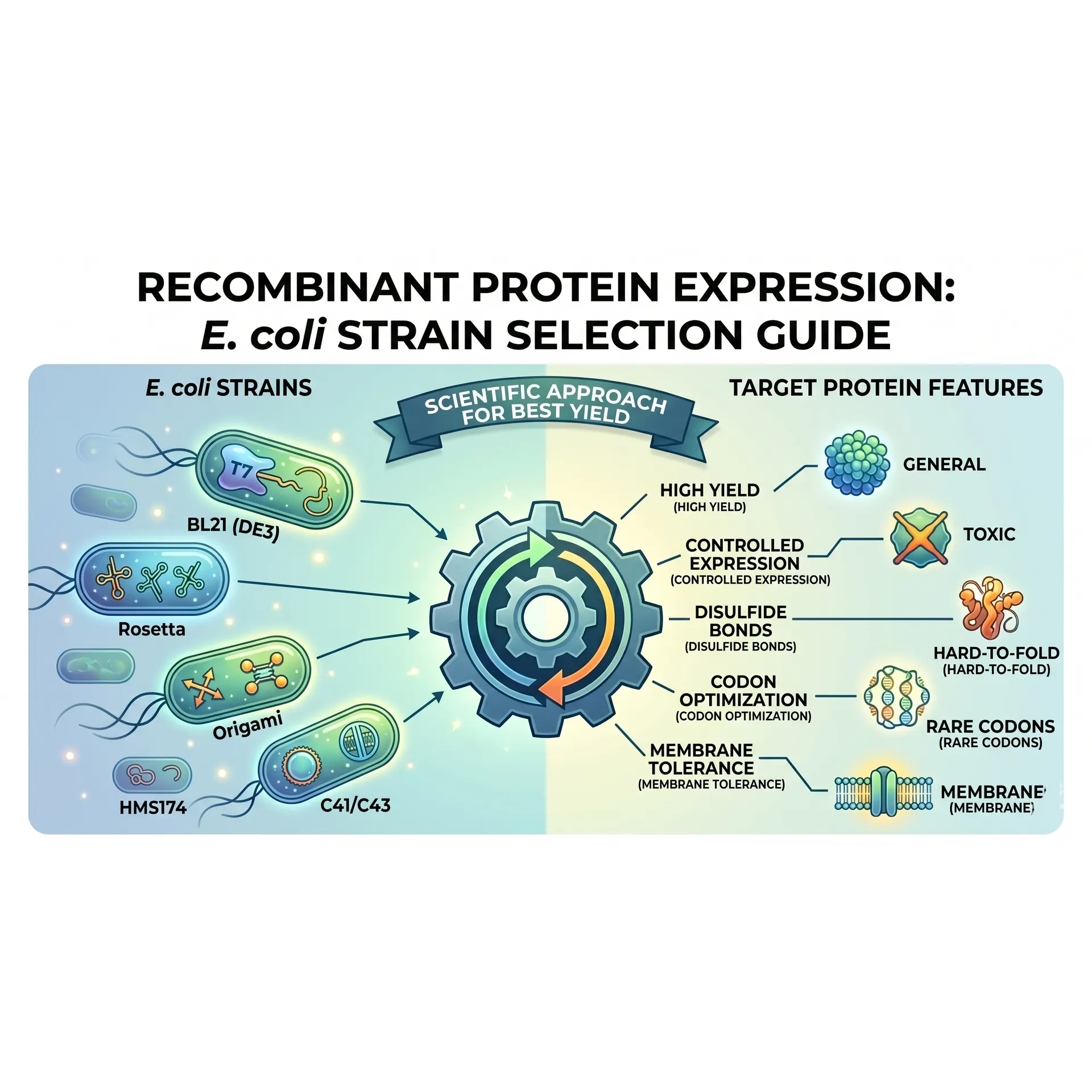
• Experimental Validation: The synthetic genes are expressed in host cells (like E. coli), and the resulting proteins are tested in the lab for functional efficacy.
Impact on Drug Discovery and Industrial Biotechnology
In academic research, the most tangible application of this technology is Structure-Based Drug Design (SBDD). Historically, the journey from drug discovery to clinical trials took 10-15 years. AI-driven methods are now compressing this timeline by optimizing candidate molecules in silico, potentially reducing the early-stage discovery phase to just 2-3 years. This is particularly critical for addressing rare diseases and the growing crisis of antibiotic-resistant bacteria, where designing specific enzyme inhibitors is a matter of global health security.
Beyond medicine, industrial biology is benefiting from synthetic enzymes designed to capture atmospheric carbon dioxide or bio-catalysts capable of operating under extreme conditions (high temperature or acidity). These "extremophilic" synthetic proteins are now a major focus of academic research aimed at mitigating climate change.
Academic Debates: Limitations and Ethical Frontiers
Despite these monumental strides, academic rigor requires us to acknowledge the current limitations. Most AI models provide "static" snapshots of proteins. However, in a physiological environment, proteins are dynamic, flexible, and in constant motion. The challenge of predicting "conformational ensembles"—the various shapes a protein takes while functioning—and the exact kinetics of the folding process remain areas of intense study.
Furthermore, the democratization of synthetic biology through AI raises significant biosecurity concerns. The possibility that harmful toxins or enhanced pathogens could be designed using these tools has led to a call for new regulatory frameworks and ethical guidelines within the scientific community. Academicians are now at the forefront of developing "digital watermarks" for synthetic DNA to ensure traceability and safety.
Artificial Intelligence is no longer just a tool for biologists; it is a new lens through which we view life itself. In 2026, a biology graduate or academic is expected to be as proficient in managing Python-based bioinformatics libraries as they are with a pipette. The resolution of the protein folding problem has opened the door to a future where we can program biological systems as if they were software, ushering in an era of unprecedented precision in medicine and environmental science.
References
1. Abramson, J., Adler, J., Dunger, J., et al. (2024). Accurate structure prediction of biomolecular interactions with AlphaFold 3. Nature, 630(8015), 493–500.
2. Baker, D. (2025). The coming of age of de novo protein design. Annual Review of Biochemistry, 94, 1-25.
3. Jumper, J., Evans, R., Pritzel, A., et al. (2021). Highly accurate protein structure prediction with AlphaFold. Nature, 596(7873), 583-589.
4. Lee, J. S., & Kim, Y. (2026). Artificial Intelligence in Proteomics: New Frontiers for Drug Discovery. Trends in Pharmacological Sciences, 47(1), 12-28.
5. Watson, J. L., Juergens, D., Bennett, N. R., et al. (2023). De novo design of protein scaffolds with computational diffusion. Nature, 620(7976), 1089-1100.
6. Zheng, W., & Zhang, Y. (2025). Benchmarking AI-based protein complex predictors in the era of AlphaFold-3. Briefings in Bioinformatics, 26(2), bbae123.
No comments yet. You can leave the first one.