
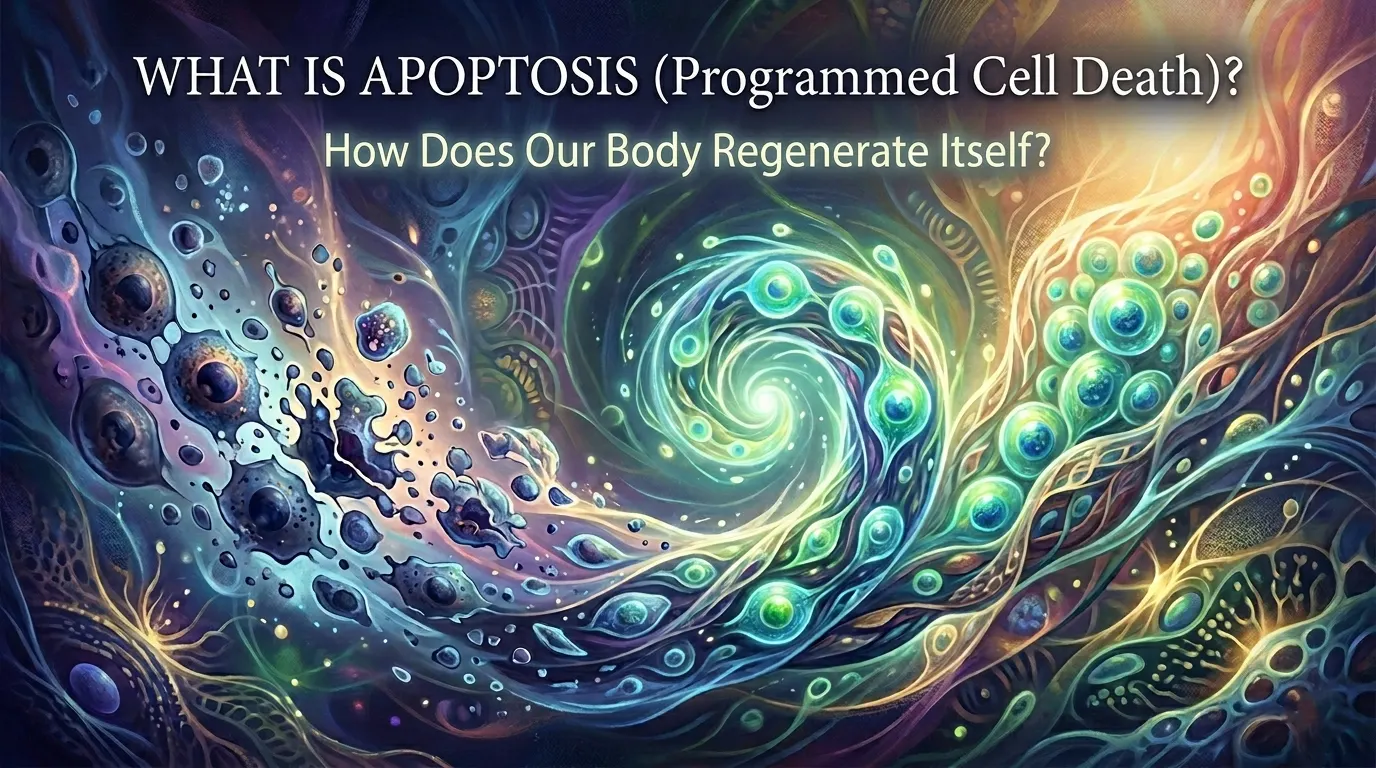
Right now, as you read these words, a silent, microscopic execution is taking place deep within your tissues. It triggers no pain, releases no screams, and causes no internal explosions. While you take a sip of your coffee or scroll down this page, approximately one million of your cells are committing suicide. Yes, you read that correctly; they are intentionally destroying themselves.
While this massive, ongoing cellular death toll might sound alarming—even dystopian—it is actually one of the most exquisite, vital biological mechanisms keeping you alive, functional, and healthy. In the scientific world, this elegant process is known as Apoptosis, or more popularly, Programmed Cell Death.
Most of us view death as a grim finality, a dark point where biology throws in the towel. Yet, at the cellular level, death is the ultimate currency paid to sustain systemic life. Let's take a closer look at this hidden cellular cleanup crew, discover how it shields us from cancer, and explore the fascinating ways our body continuously rises from its own microscopic ashes.
Sculpting Life From Death: Apoptosis as the Master Artist
To truly understand the logic of apoptosis, let’s begin with an artistic analogy. Imagine a master sculptor standing before a massive, shapeless block of marble. Armed with a chisel and a mallet, the artist begins chipping away at the stone. The sculptor does not add any material to the block; rather, they subtract pieces of marble to unveil the stunning statue trapped inside.From our earliest days in the womb, our biology operates in this exact same manner. When you were a tiny embryo, your developing hands and feet resembled the webbed feet of a duck; your fingers and toes were completely fused together. As development progressed, a genetic command ordered the cells making up those biological webs to undergo apoptosis. As those cells quietly committed suicide and vanished, they sculpted the distinct, independent fingers and toes you use today. If this self-destruct mechanism failed for even a brief moment, we would all be born with webbed digits.
Similarly, during early brain development, our bodies produce far more neurons than we will ever need. Over time, millions of neurons that fail to establish functional synpatic networks commit suicide, leaving behind an optimized, highly efficient neural highway. Apoptosis is nature’s most elegant chisel, subtracting cells to perfect the architecture of life.
Necrosis vs. Apoptosis: Controlled Demolition vs. An Explosive Crime Scene
Cells generally die in one of two ways: Necrosis or Apoptosis. Contrasting these two phenomena reveals exactly why apoptosis is considered such a polite, highly coordinated cellular affair.- Necrosis (Cellular Murder / Accident): This occurs when a cell is exposed to an abrupt, catastrophic external trauma—such as physical injury, toxins, infection, or a sudden loss of oxygen. In necrosis, the cell swells and violently bursts. Its highly acidic internal fluids and harsh digestive enzymes spill directly onto neighboring tissues. It is the biological equivalent of a chemical factory exploding in a crowded neighborhood; the surrounding environment suffers severe collateral damage, triggering a massive inflammatory response (swelling and pain).
- Apoptosis (Cellular Suicide / Controlled Demolition): This process is entirely quiet, planned, and methodical. When a cell grows old, accumulates irreparable DNA damage, or becomes a burden to the body, it voluntarily hits its internal self-destruct button. The cell gently shrinks, cleaves its own DNA into neat fragments, and packages its contents into tight, membrane-bound cellular parcels called apoptotic bodies. Chaperoned by this packaging, nearby immune system scavenging cells (macrophages) arrive and swiftly engulf the debris without leaving a single trace of inflammation behind. The old structure is dismantled neatly, keeping the cellular neighborhood pristine.
Who Pulls the Trigger? (The Intrinsic and Extrinsic Pathways)
A cell does not commit suicide without a profound, heavily verified reason. The execution sequence can be ignited by two distinct molecular pathways: Intrinsic (Internal) and Extrinsic (External).The Intrinsic Pathway (The Cellular Conscience)
The organelles inside a cell—especially the mitochondria—and its genetic material are constantly subjected to rigorous quality control checks. Imagine a cell's DNA suffers catastrophic, irreversible double-strand breaks due to UV radiation from a sunburn or environmental toxins. A heroic surveillance protein named p53 (widely termed the Guardian of the Genome) halts replication to try and repair the strand. If the damage is too extensive, p53 surrenders the repair effort and migrates to the mitochondrial membrane. It opens specific molecular gates, causing a protein called Cytochrome c to leak from the mitochondria into the cytoplasm. This leakage serves as the ultimate chemical match, activating a family of cellular executioner enzymes known as Caspases that systematically dismantle the cell from within.
The Extrinsic Pathway (The Immune System's Mandate)
Sometimes, a cell might appear healthy from the inside, but it poses an existential threat to the rest of the body. For example, a virus might have successfully hijacked the cell, converting it into a viral production facility. Alternatively, the cell may be showing early mutations that lead to malignant cancer. Sensing this danger, the elite soldiers of our immune system (Cytotoxic T cells) track down the compromised cell. They bind directly to specific "Death Receptors" (such as Fas or TNF receptors) on the cell's outer membrane, delivering a mandatory biochemical command to die. Honoring the collective safety of the organism, the cell obeys, igniting its caspase cascade and initiating its own execution.
A Delicate Balancing Act: Cancer vs. Neurodegeneration
The word Apoptosis stems from an ancient Greek term describing "the shedding of leaves from trees." Just as a tree must shed its withered autumn leaves to survive the winter, our bodies must continually drop aging cells to maintain homeostasis. When this delicate balance tilts, it triggers two catastrophic health landscapes:When Apoptosis Underperforms: Cancer
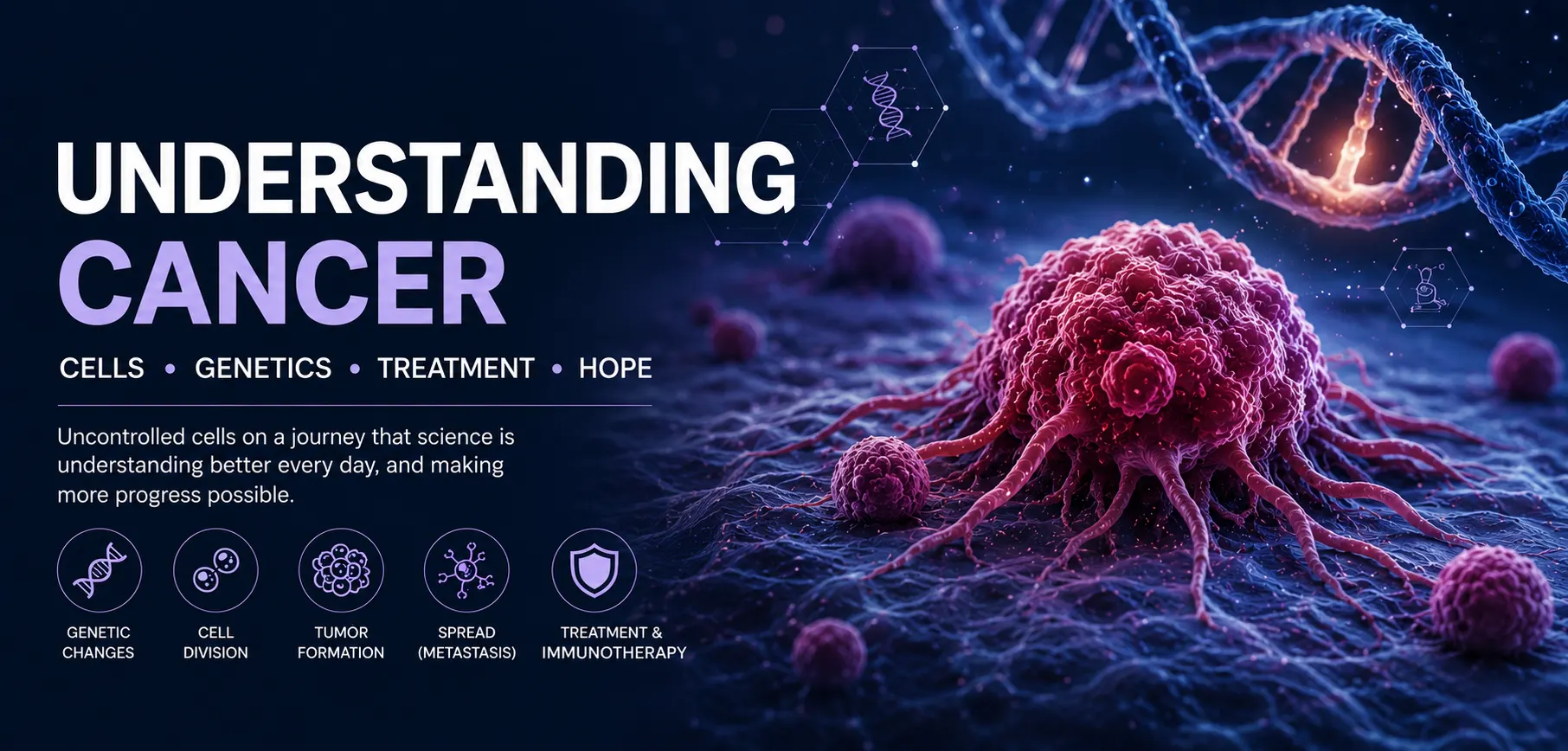
Cancer cells are the ultimate molecular outlaws. While a normal cell willingly submits to apoptosis when its genetic blueprints break down, a cancer cell mutates its suicide genes (most notably mutating p53), effectively cutting the wires to its self-destruct button. When the body screams at it to die, the cancer cell ignores the signal, opting instead for a form of broken immortality. It divides unchecked, bypassing aging checkpoints, and rapidly clusters into malignant tumors. Today, the core objective of modern oncological treatments like chemotherapy and radiation is to forcefully reconnect those broken circuits and manually trigger the apoptotic switch within those rogue cells.
When Apoptosis Overperforms: Neurodegeneration (Alzheimer’s & Parkinson’s)
The opposite side of the coin is equally devastating. If the molecular threshold for apoptosis becomes hyper-sensitive, the self-destruct sequence begins wiping out perfectly healthy, vital cells. When healthy neurons in the brain prematurely choose to commit suicide, the brain tissue undergoes progressive, irreversible atrophy. This hyper-active execution pathway is the underlying mechanistic driver behind neurodegenerative diseases like Alzheimer's, Parkinson's, and ALS.
Conclusion: Dying to Live
Our bodies are dynamic, non-stop construction sites, constantly tearing down old scaffolding to rebuild themselves from scratch. Every single year, you lose a mass of cells roughly equal to your entire body weight through apoptosis, replacing them with fresh, energetic variants. In terms of your individual cellular components, the "you" of a year ago is fundamentally different from the "you" reading this sentence today.Apoptosis provides us with one of nature’s most profound philosophical insights: sometimes, for the whole to survive, the part must be willing to let go. Without this selfless cellular sacrifice, we would lack defined fingers, functional brains, and a shield against cancer. The quiet, polite, and noble departure of our cells remains the greatest insurance policy behind every healthy breath we take.
References
- Adams, J. M., & Cory, S. (2007). The Bcl-2 apoptotic switch in cancer development and therapy. Oncogene, 26(9), 1324-1337. https://doi.org/10.1038/sj.onc.1210220
- Elmore, S. (2007). Apoptosis: a review of programmed cell death. Toxicologic Pathology, 35(4), 495-516. https://doi.org/10.1080/01926230701320337
- Fuchs, Y., & Steller, H. (2011). Programmed cell death in animal development and disease. Cell, 147(4), 742-758. https://doi.org/10.1016/j.cell.2011.10.033
- Green, D. R., & Llambi, F. (2015). Cell death signaling. Cold Spring Harbor Perspectives in Biology, 7(12), a006080. https://doi.org/10.1101/cshperspect.a006080
- Hanahan, D., & Weinberg, R. A. (2011). Hallmarks of cancer: the next generation. Cell, 144(5), 646-674. https://doi.org/10.1016/j.cell.2011.02.013
- Kerr, J. F., Wyllie, A. H., & Currie, A. R. (1972). Apoptosis: a basic biological phenomenon with wide-ranging implications in tissue kinetics. British Journal of Cancer, 26(4), 239-257. https://doi.org/10.1038/bjc.1972.33
- Mattson, M. P. (2000). Apoptosis in neurodegenerative disorders. Nature Reviews Molecular Cell Biology, 1(2), 120-130. https://doi.org/10.1038/35040009
- Reed, J. C. (2000). Mechanisms of apoptosis. American Journal of Pathology, 157(5), 1415-1430. https://doi.org/10.1016/S0002-9440(10)64779-7
- Taylor, R. C., Cullen, S. P., & Martin, S. J. (2008). Apoptosis: controlled demolition at the cellular level. Nature Reviews Molecular Cell Biology, 9(3), 231-241. https://doi.org/10.1038/nrm2312
- Yuan, J., & Yankner, B. A. (2000). Apoptosis in the nervous system. Nature, 407(6805), 802-809. https://doi.org/10.1038/35037739
https://nutracompare.com/
Does your blog have a contact page? I'm having a tough time
locating it but, I'd like to send you an email.
I've got some ideas for your blog you might
be interested in hearing. Either way, great blog
and I look forward to seeing it improve over time.
https://nutracompare.com/
https://supplementresult.com/
Just want to say your article is as amazing. The clearness for
your put up is simply excellent and that i could
suppose you're knowledgeable on this subject.
Well together with your permission allow me to
clutch your RSS feed to keep updated with coming
near near post. Thank you one million and please keep up the gratifying work.
https://supplementresult.com/
https://prattmed.com/
Thank you for the auspicious writeup. It in fact was a amusement account it.
Look advanced to far added agreeable from you!
However, how could we communicate? https://prattmed.com/
https://misslaur.com/
Pretty nice post. I just stumbled upon your blog and wished to say that I have
truly enjoyed browsing your blog posts. After all I'll be subscribing to your rss feed and I hope you write again soon!https://misslaur.com/
https://supplementfan.com/
Great items from you, man. I have understand your stuff previous to and you're simply
too wonderful. I actually like what you have acquired here, certainly like what you're saying and the best way wherein you say it.
You make it entertaining and you still take care of to keep it
sensible. I can't wait to learn much more from you. This is really a tremendous site.
https://supplementfan.com/
https://prattmed.com/
If yоu wish for to ցet much from this piece оf writing tһen you һave to apply sսch strategies tо yoսr won webpage.
https://prattmed.com/
Link exchange is nothing else but it is just placing the other person's
weblog link on your page at proper place and other person will also do similar for you.
https://misslaur.com/
My brother recommended I might like this blog. He was totally right.
This submit actually made my day. You can not consider just how much time I had spent for this info!
Thanks! https://www.mitolyncheck.shop/