
A comprehensive guide prepared for beginners in biology and university students. Explore the 100 most important fundamental terms of biology, from the cell to the ecosystem.
The First Step to Understanding Biology: Learning the Fundamental Concepts
Biology is a fascinating branch of science that studies life and allows us to understand how living organisms function. However, for many students just starting to learn biology, one of the biggest challenges encountered is being introduced to a vast number of new terms and concepts.
Concepts such as DNA, gene, cell, mutation, ecosystem, homeostasis, or photosynthesis may seem complex at first. Yet, these terms form the fundamental building blocks of biology. Understanding these concepts makes learning advanced topics much easier.
In this guide, we explain the 100 fundamental biology terms that biology students, researcher candidates, and anyone interested in biology need to know, using simple and understandable language.
Cell and Molecular Biology Terms
Cell: The smallest fundamental unit of living organisms in terms of structure and function.Organelle: Specialized structures within a cell that perform specific tasks.
Nucleus: The control center of the cell that carries genetic information.
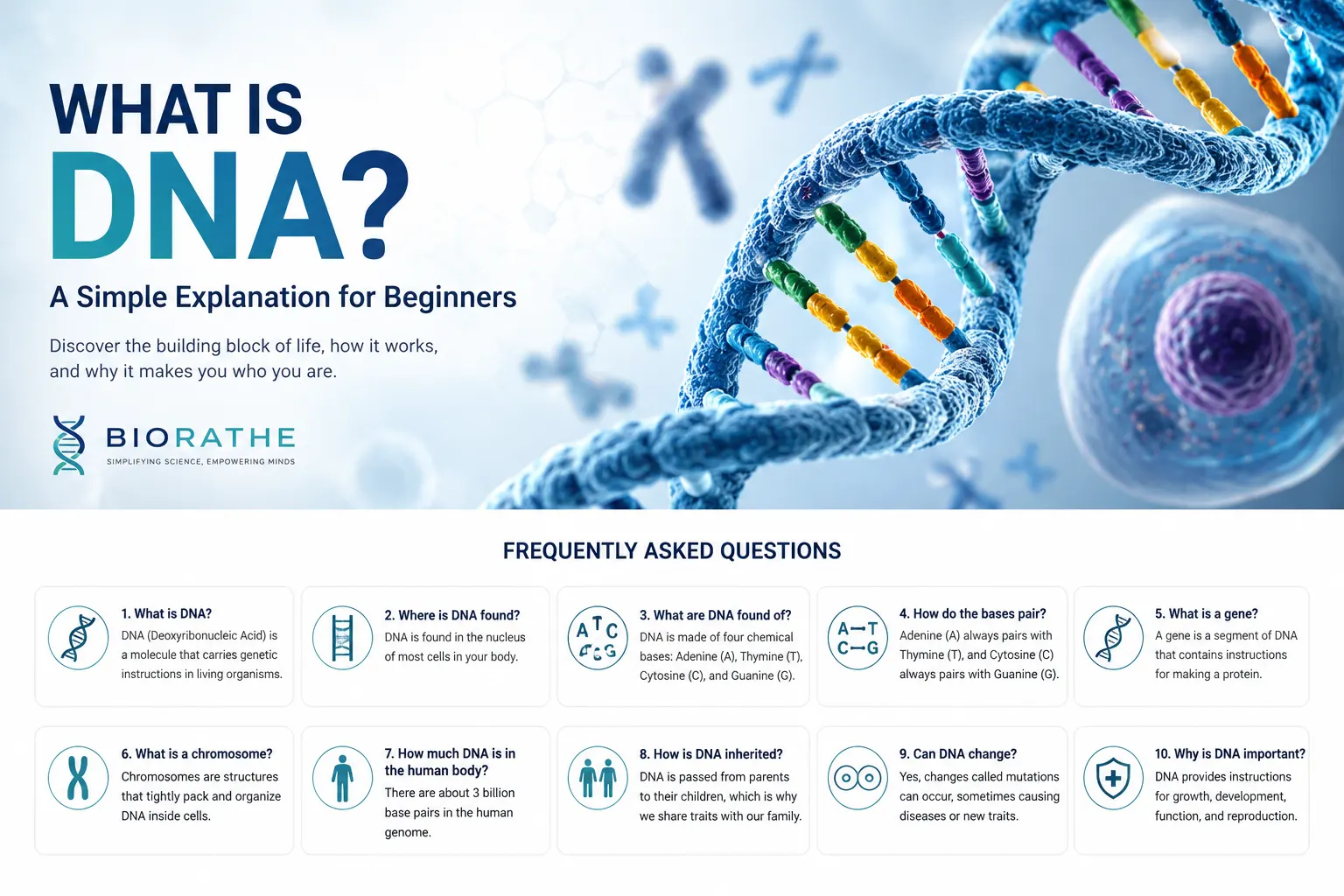
DNA: The molecule that carries the genetic instructions of living organisms.
RNA: The molecule that enables the information in DNA to be used in protein production.
Gene: A segment of DNA that carries hereditary information.
Chromosome: The packaged state of DNA combined with proteins.
Protein: Large molecules that undertake structural, enzymatic, and regulatory tasks in living organisms.
Enzyme: Biological catalysts that speed up chemical reactions.
Ribosome: The cellular structure where protein synthesis takes place.
Mitochondrion: The energy production center of the cell.
Chloroplast: The organelle in plants where photosynthesis takes place.
Cell Membrane: The selectively permeable structure that separates the cell from the external environment.
Cytoplasm: The fluid environment inside the cell.
Diffusion: The movement of substances from an area of higher concentration to an area of lower concentration.
Osmosis: The movement of water across a semi-permeable membrane.
ATP: The primary energy-carrier molecule of cells.
Metabolism: The sum of all chemical reactions in a living organism.
Homeostasis: The ability of living organisms to maintain their internal balance.
Cellular Respiration: The process by which cells break down nutrients to produce energy.
Genetics Terms
Heredity: The transmission of traits from parents to offspring.Allele: One of the alternative forms of a gene.
Genotype: The genetic makeup of an individual.
Phenotype: The observable characteristics resulting from the interaction of genetic makeup and the environment.
Dominant Gene: The type of gene that expressively shows its effect.
Recessive Gene: A gene whose effect can only be shown when present in two copies.
Mutation: A permanent change occurring in the DNA sequence.
Rekombinasyon (Recombination): The rearrangement of genetic material.
Genetic Diversity: The total of genetic differences within a population.
Genome: The entire genetic material of an organism.
Evolution Terms
Evolution: The change shown by living organisms over generations.Natural Selection: The process by which individuals better adapted to their environment reproduce more successfully.
Adaptation: The traits of living organisms that allow them to adapt to their environment.
Species: A group of organisms that can breed with each other to produce fertile offspring.
Speciation: The process of the emergence of new species.
Fossil: The preserved remains of organisms that lived in the past.
Common Ancestor: The ancestor from which different species evolutionarily derived.
Biological Diversity: The variety of life forms on Earth.
Population: A community of individuals belonging to the same species in a specific area.
Ecological Niche: The role of an organism within an ecosystem.
Ecology Terms
Ecology: The branch of science that studies the relationships of living organisms with their environment.Ecosystem: The system formed by living organisms and their environment.
Habitat: The natural living environment of an organism.
Biome: Broad geographical areas with similar climates and plant/animal communities.
Food Chain: The pathway along which energy is transferred between living organisms.
Food Web: The interconnected combination of multiple food chains.
Producer: An organism that can produce its own food.
Consumer: An organism that obtains its food from other living things.
Decomposer: An organism that breaks down dead organic matter, returning it to nature.
Biodiversity: The variety of living organisms in a particular region.
Microbiology Terms
Microorganism: Living things that are too small to be seen without a microscope.Bacteria: Single-celled, prokaryotic microorganisms.
Virus: Biological structures that require living cells in order to replicate.
Fungus: A group of organisms including yeasts, molds, and mushrooms.
Protozoa: Single-celled, eukaryotic microorganisms.
Pathogen: Organisms capable of causing disease.
Antibiotic: Substances that kill bacteria or inhibit their growth.
Microbiota: The entirety of microorganisms living in a specific environment.
Microbiome: The total genetic material of microorganisms in an environment.
Probiotic: Microorganisms that are beneficial to human health.
Botany Terms
Photosynthesis: The process by which plants convert solar energy into chemical energy.Chlorophyll: The pigment that gives plants their green color.
Stoma: Openings on plant leaves that enable gas exchange.
Xylem: The tissue that transports water and minerals in plants.
Phloem: The tissue that enables the transport of organic substances in plants.
Pollen: The structure carrying the male reproductive cell in plants.
Seed: The structure that allows a new plant to develop.
Germination: The beginning of a seed's development under suitable conditions.
Transpiration: The loss of water from the leaves of plants.
Angiosperm: Flowering plants.
Human Physiology Terms
Tissue: A group of cells performing similar tasks.Organ: Groups of tissues performing specific functions.
System: A collection of organs working together.
Nervous System: Responsible for communication and coordination in the body.
Circulatory System: Enables the transport of blood and nutrients.
Respiratory System: Performs oxygen intake and carbon dioxide elimination.
Digestive System: Provides the breakdown and absorption of nutrients.
Immune System: The defense system that protects the body against diseases.
Hormone: Chemical messengers acting as regulators in the body.
Endocrine System: The system consisting of glands that produce hormones.
Biotechnology Terms
Biotechnology: The use of living systems for technological purposes.Genetic Engineering: The modification and editing of genetic material.
CRISPR: A gene-editing technology that allows precise modifications to be made on DNA.
Gene Therapy: The treatment of genetic diseases at the gene level.
Cloning: The process of creating genetically identical individuals.
Recombinant DNA: DNA created by combining DNA segments taken from different sources.
Bioinformatics: The analysis of biological data using computer technologies.
Genome Sequencing: Determining the DNA sequence of an organism.
Synthetic Biology: The design and development of new biological systems.
Stem Cell: Unspecialized cells capable of transforming into different cell types.
General Biology Concepts
Living Organism: An entity that exhibits life characteristics such as metabolism, growth, and reproduction.Organism: An individual living being capable of independent existence.
Energy: The power required for living organisms to maintain their life activities.
Biomass: The total amount of living matter in an ecosystem.
Sustainability: The use of natural resources without jeopardizing future generations.
Carbon Cycle: The circulation process of carbon between living organisms and the environment.
Nitrogen Cycle: Refers to the circulation of nitrogen within the ecosystem.
Water Cycle: The continuous movement of water between the atmosphere, land, and living things.
Scientific Method: The systematic process used in scientific research.
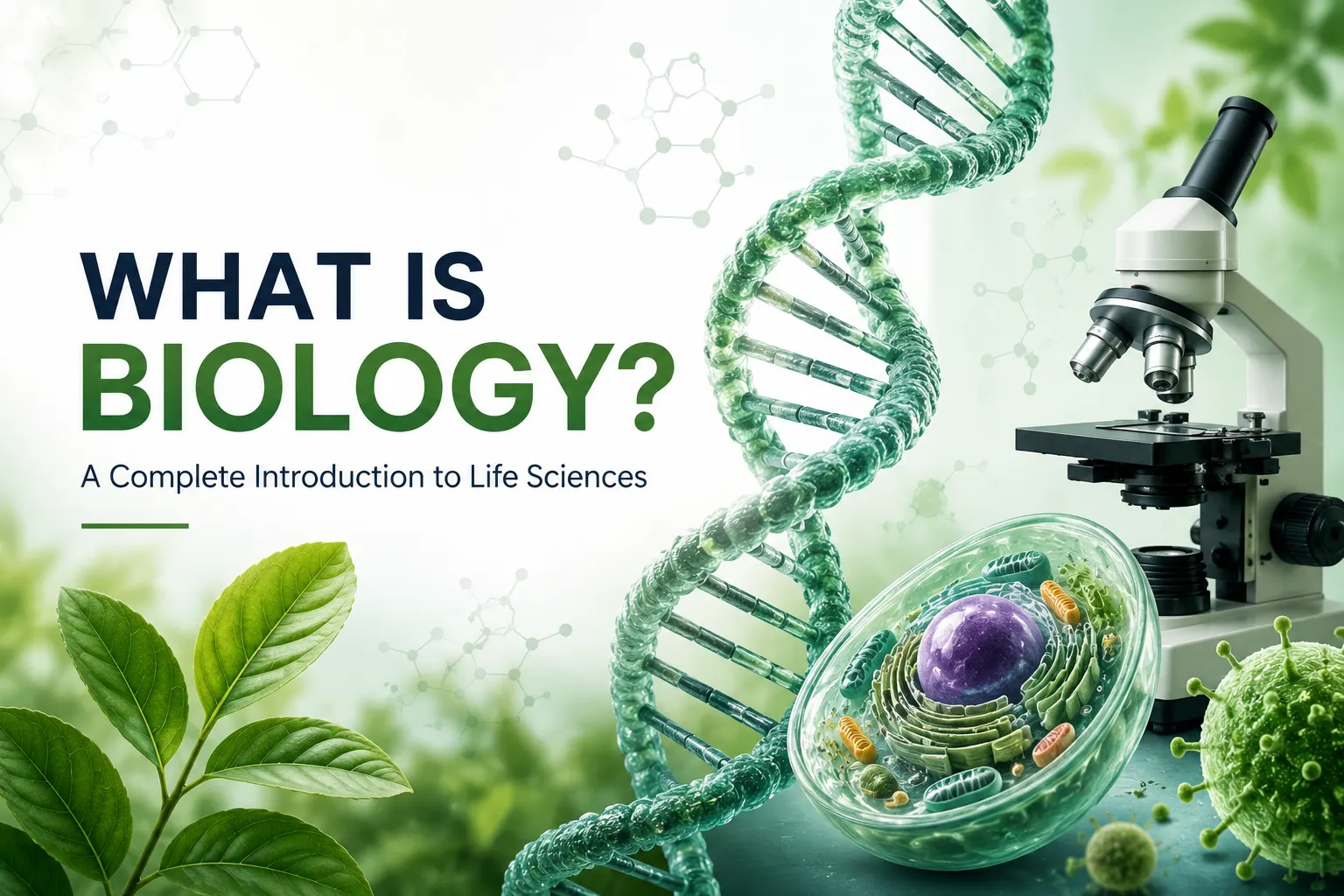
Biology: The branch of science that studies living organisms and life processes.
No comments yet. You can leave the first one.