
Have you ever wondered why you look similar to your parents? Maybe you have your mother's eyes, your father's smile, or a mix of traits from both. The answer to these questions can be traced back to a remarkable molecule found inside your cells: DNA.
DNA is one of the most important molecules in biology. It contains the instructions that allow living organisms to grow, function, repair themselves, and reproduce. Every plant, animal, and human depends on DNA to survive. In this beginner-friendly guide, we'll explore what DNA is, how it works, and why it plays such a crucial role in life.
What Does DNA Stand For?
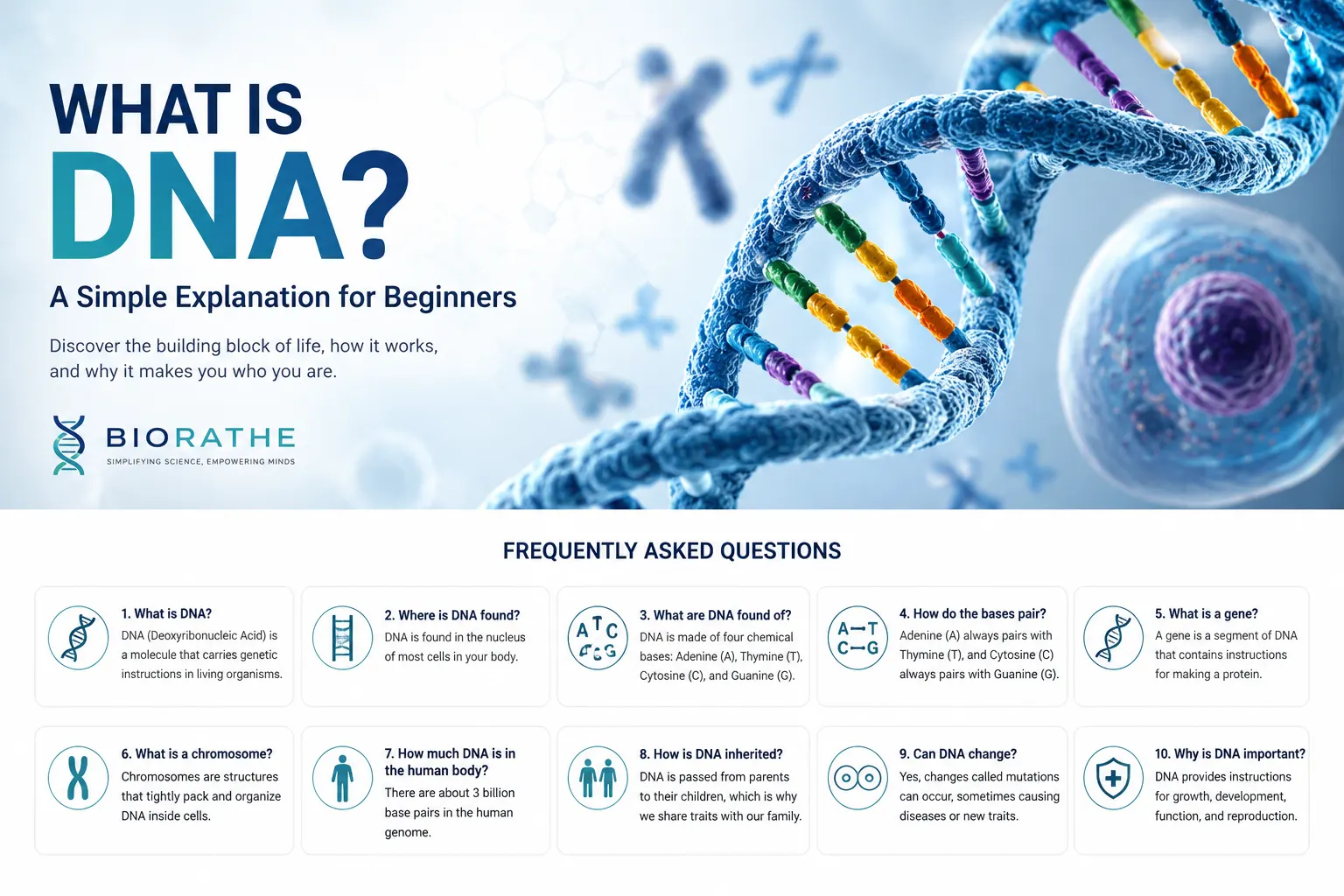
DNA stands for Deoxyribonucleic Acid. The name may sound complicated, but the idea behind it is relatively simple. DNA is a molecule that stores biological information. You can think of it as a set of instructions that tells cells what to do and how to do it.
Almost every cell in your body contains DNA. In fact, nearly all of your cells carry the same genetic information, even though they perform very different functions.
Where Is DNA Found?
DNA is located inside the nucleus of most human cells. The nucleus acts as the cell's control center, protecting and organizing the genetic information stored within. Your body contains trillions of cells, and nearly every one of them contains a complete copy of your DNA. This means that the genetic instructions used to build and maintain your body are available throughout your tissues and organs.
What Does DNA Look Like?
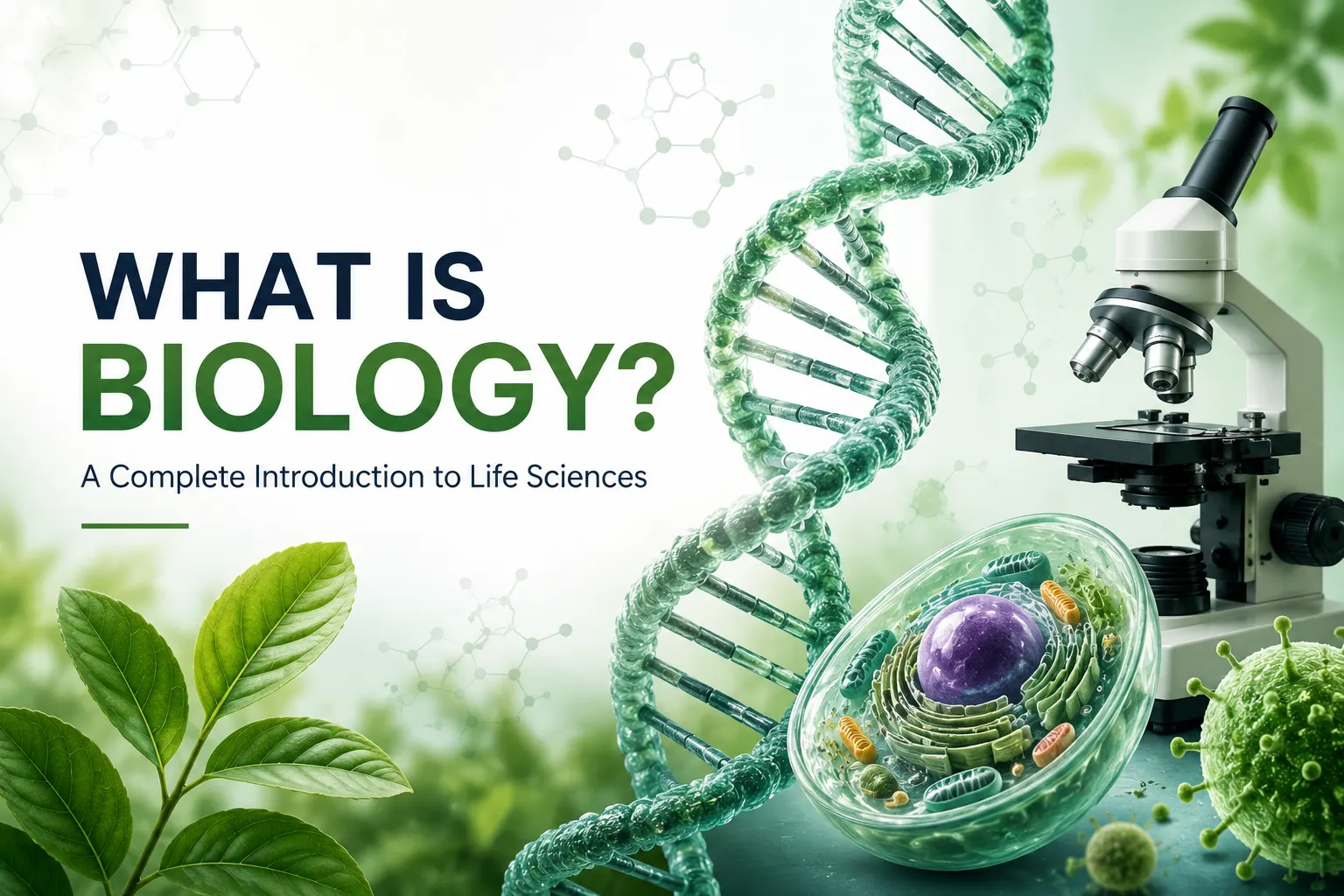
Scientists often describe DNA as a twisted ladder. This structure is known as a double helix, a discovery that transformed modern biology. The double helix consists of two strands wrapped around each other in a spiral shape. The sides of the ladder are made from alternating sugar and phosphate molecules. The steps of the ladder are formed by pairs of chemical bases that contain the actual genetic information. Although DNA is microscopic, its structure is incredibly efficient. It allows genetic information to be stored, copied, and passed on with remarkable accuracy.
The Four Letters of the Genetic Code
DNA uses only four chemical bases to store information:
A (Adenine)
T (Thymine)
C (Cytosine)
G (Guanine)
These four bases form the biological alphabet of life.
Each base pairs with a specific partner:
Adenine (A) pairs with Thymine (T)
Cytosine (C) pairs with Guanine (G)
This pairing system is essential because it allows DNA to replicate accurately whenever cells divide.
What makes DNA so powerful is not the letters themselves, but the order in which they appear. Just as different combinations of letters create different words, different DNA sequences create different biological instructions.
What Is a Gene?
A gene is a specific section of DNA that contains instructions for making a particular protein. Proteins perform many of the essential jobs in the body. They help build muscles, transport oxygen, support the immune system, digest food, and regulate countless cellular processes. Humans have thousands of genes, each contributing to different biological functions and traits.
In simple terms, if DNA is a large instruction manual, genes are the individual instructions contained within it.
What Is the Human Genome?
The complete set of DNA in an organism is called its genome. The human genome contains approximately 3 billion DNA base pairs. That's an enormous amount of information packed into an incredibly small space. If all the DNA from a single human cell were stretched out, it would measure roughly two meters (about six feet) in length. Yet it fits inside a microscopic nucleus because it is tightly wrapped around specialized proteins and organized into structures called chromosomes. Most human cells contain 46 chromosomes arranged in 23 pairs.
Why Is DNA Important?
DNA is essential because it provides the instructions needed for life. Its role can be divided into three major functions:
1. Growth and Development
DNA directs the transformation of a single fertilized egg into a fully developed human being. It guides the formation of tissues, organs, and body systems throughout development.
2. Inheritance
DNA is passed from parents to their children. This is why family members often share physical characteristics and certain inherited traits. Over long periods of time, small genetic changes called mutations can accumulate and contribute to evolution.
3. Cell Maintenance
DNA is constantly helping cells perform everyday tasks. It provides instructions for repairing damage, producing proteins, responding to infections, and maintaining normal bodily functions.
Can DNA Change?
Although DNA is generally copied with high accuracy, changes can sometimes occur. These changes are called mutations. Many mutations have little or no effect, while others can influence traits, contribute to diseases, or occasionally provide beneficial adaptations. Mutations are a natural part of biology and play an important role in evolution.
Summary
DNA is the molecule that stores the genetic instructions for life. Found in nearly every cell of your body, it contains the information needed for growth, development, reproduction, and everyday cellular function. Using just four chemical letters—A, T, C, and G—DNA creates the extraordinary diversity of life on Earth. From eye color and height to the functioning of your organs, DNA influences nearly every aspect of who you are. Understanding DNA is the first step toward understanding genetics, biotechnology, evolution, and modern medicine. As scientific research continues to advance, DNA remains at the center of some of the most exciting discoveries in biology.
References
1. Alberts, B., Johnson, A., Lewis, J., Raff, M., Roberts, K., & Walter, P. (2002). Molecular biology
2. of the cell (4th ed.). Garland Science.
3. Watson, J. D., & Crick, F. H. (1953). Molecular structure of nucleic acids: A structure for
4. deoxyribose nucleic acid. Nature, 171(4356), 737-738.
5. National Human Genome Research Institute (NHGRI). (2023). Deoxyribonucleic Acid (DNA).
6. U.S. National Institutes of Health.
7. https://www.genome.gov/genetics-glossary/Deoxyribonucleic-Acid
No comments yet. You can leave the first one.