
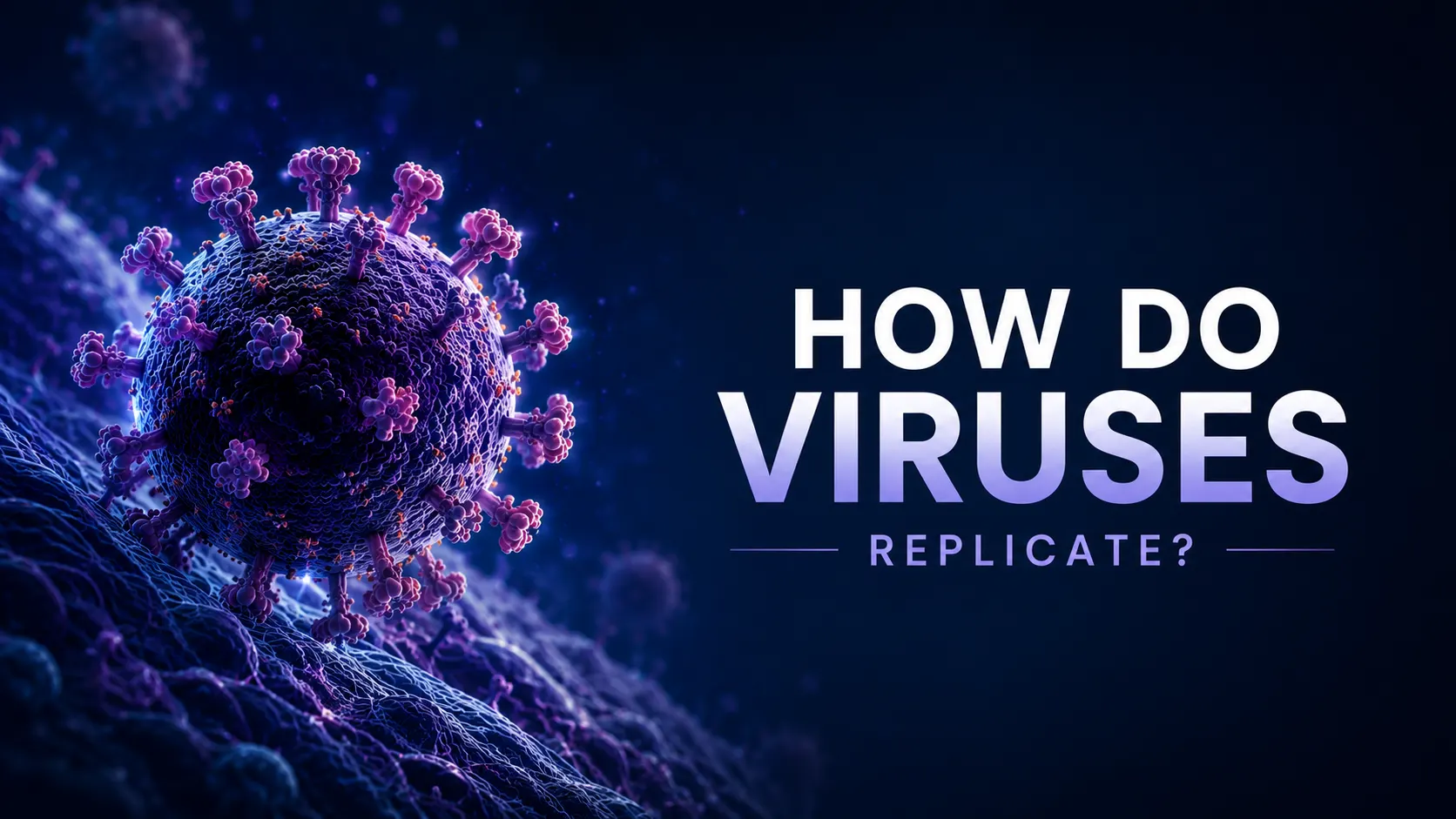
One of the most fascinating facts about viruses is that they cannot reproduce on their own.
Unlike bacteria, plants, animals, or human cells, viruses lack the cellular machinery required to generate energy, produce proteins, and replicate independently. Because of this, viruses are often described as obligate intracellular parasites, meaning they can only reproduce inside living cells.
But how exactly do viruses create thousands of copies of themselves after infecting a host?
What Is a Virus?
A virus is a microscopic infectious particle composed of genetic material—either DNA or RNA—surrounded by a protective protein coat called a capsid.
Some viruses also possess an outer lipid envelope. Viruses are much smaller than most cells and can only be observed using powerful microscopes.
Their primary goal is simple: to deliver their genetic information into a host cell and use that cell to produce new viruses.
Why Can't Viruses Reproduce Alone?
Living cells contain complex machinery that enables them to grow and divide. Viruses lack many of these essential components, including:
Ribosomes
Energy-producing systems
Cellular organelles
As a result, viruses cannot manufacture proteins or generate energy independently. Instead, they hijack the molecular machinery of host cells. In essence, infected cells become virus-producing factories.
How Do Viruses Reproduce?
The viral replication cycle generally consists of five major stages.
1. Attachment
The process begins when a virus binds to specific receptors on the surface of a host cell. This interaction is often compared to a lock-and-key mechanism. For example, SARS-CoV-2 uses ACE2 receptors found on human cells.
2. Entry
After attachment, the virus enters the host cell. Some viruses fuse directly with the cell membrane, while others are engulfed through cellular processes.
3. Uncoating
Once inside, the virus releases its genetic material by removing its protective protein coat. The viral genome is now exposed within the host cell.
4. Replication and Protein Synthesis
This is the core of the infection process.
The virus takes control of the host cell's machinery to:
Replicate its DNA or RNA
Produce viral proteins
Assemble viral components
Instead of performing normal cellular functions, the infected cell focuses on making viruses.
5. Release
Newly formed viruses leave the host cell and spread to infect additional cells. Some viruses cause the host cell to burst, while others exit through a process called budding. A single infected cell can release hundreds or even thousands of new viral particles.
How Fast Can Viruses Reproduce?
Replication speed varies among different viruses. Some viruses can generate thousands of copies within just a few hours. This rapid multiplication helps explain why symptoms can develop quickly after infection.
What Is the Difference Between Viruses and Bacteria?
Viruses and bacteria are often confused, but they are fundamentally different.
Bacteria:
Are living cells
Can reproduce independently
Can often be treated with antibiotics
Viruses:
Are not cells
Cannot reproduce alone
Are not affected by antibiotics
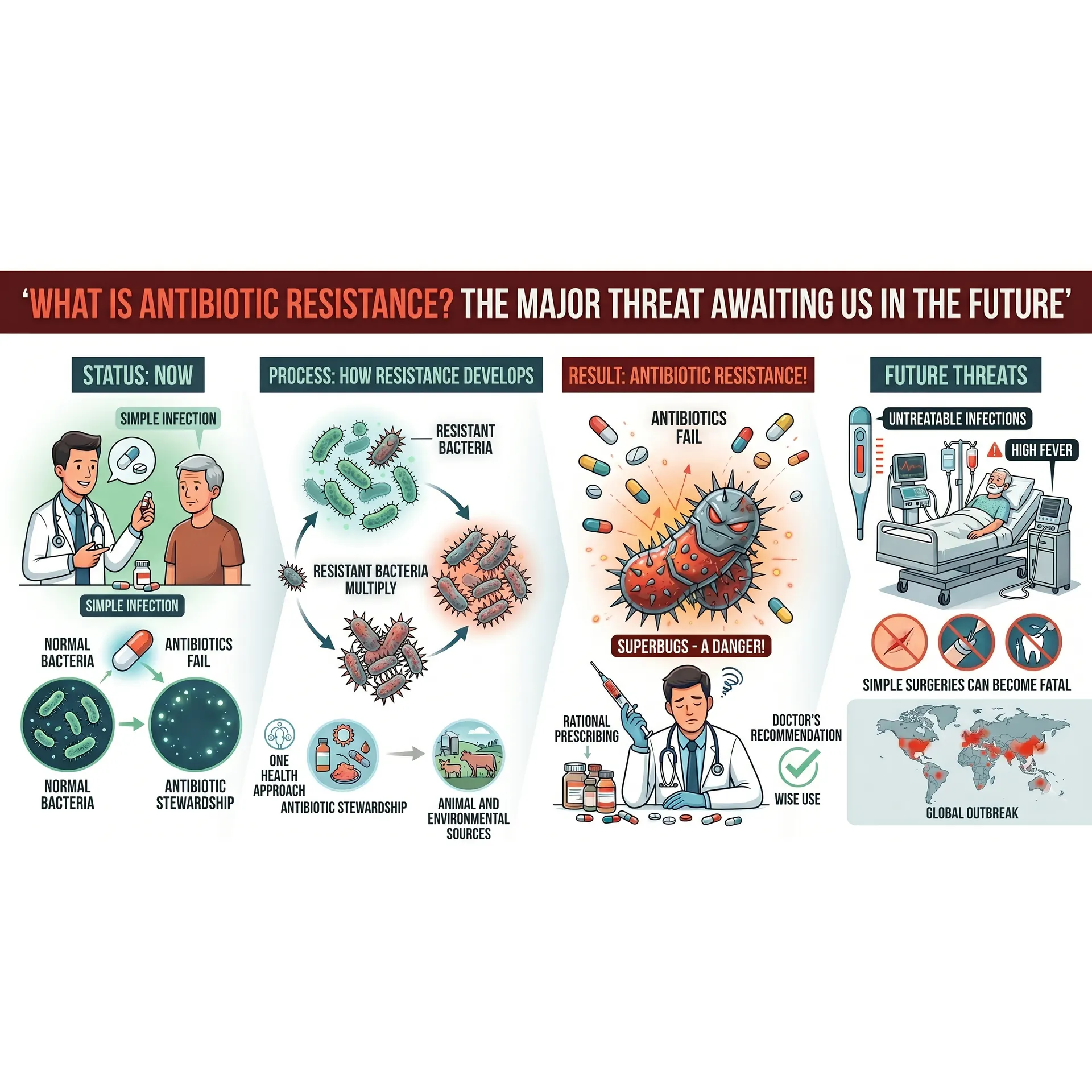
This is why antibiotics do not cure viral infections such as influenza or COVID-19.
Conclusion
Viruses are unique biological entities that depend entirely on host cells for reproduction. By hijacking cellular machinery, they can rapidly produce large numbers of new viral particles. Understanding how viruses reproduce is essential for developing vaccines, antiviral drugs, and effective strategies to prevent infectious diseases.
References
- Alberts, B., Johnson, A., Lewis, J., Morgan, D., Raff, M., Roberts, K., & Walter, P. (2022). Molecular biology of the cell (7th ed.). W. W. Norton & Company.
- Flint, S. J., Racaniello, V. R., Rall, G. F., Skalka, A. M., & Enquist, L. W. (2020). Principles of virology (5th ed.). ASM Press.
- Knipe, D. M., & Howley, P. M. (2021). Fields virology (7th ed.). Wolters Kluwer.
- Lodish, H., Berk, A., Kaiser, C. A., Krieger, M., Bretscher, A., Ploegh, H., Amon, A., & Martin, K. C. (2021). Molecular cell biology (9th ed.). W. H. Freeman.
- National Institute of Allergy and Infectious Diseases. (2024). Understanding viruses. Retrieved from https://www.niaid.nih.gov
- National Human Genome Research Institute. (2024). Viruses and infectious diseases. Retrieved from https://www.genome.gov
- Ryu, W. S. (2017). Molecular virology of human pathogenic viruses. Academic Press.
- World Health Organization. (2025). Infectious diseases and viruses. Retrieved from https://www.who.int
No comments yet. You can leave the first one.