
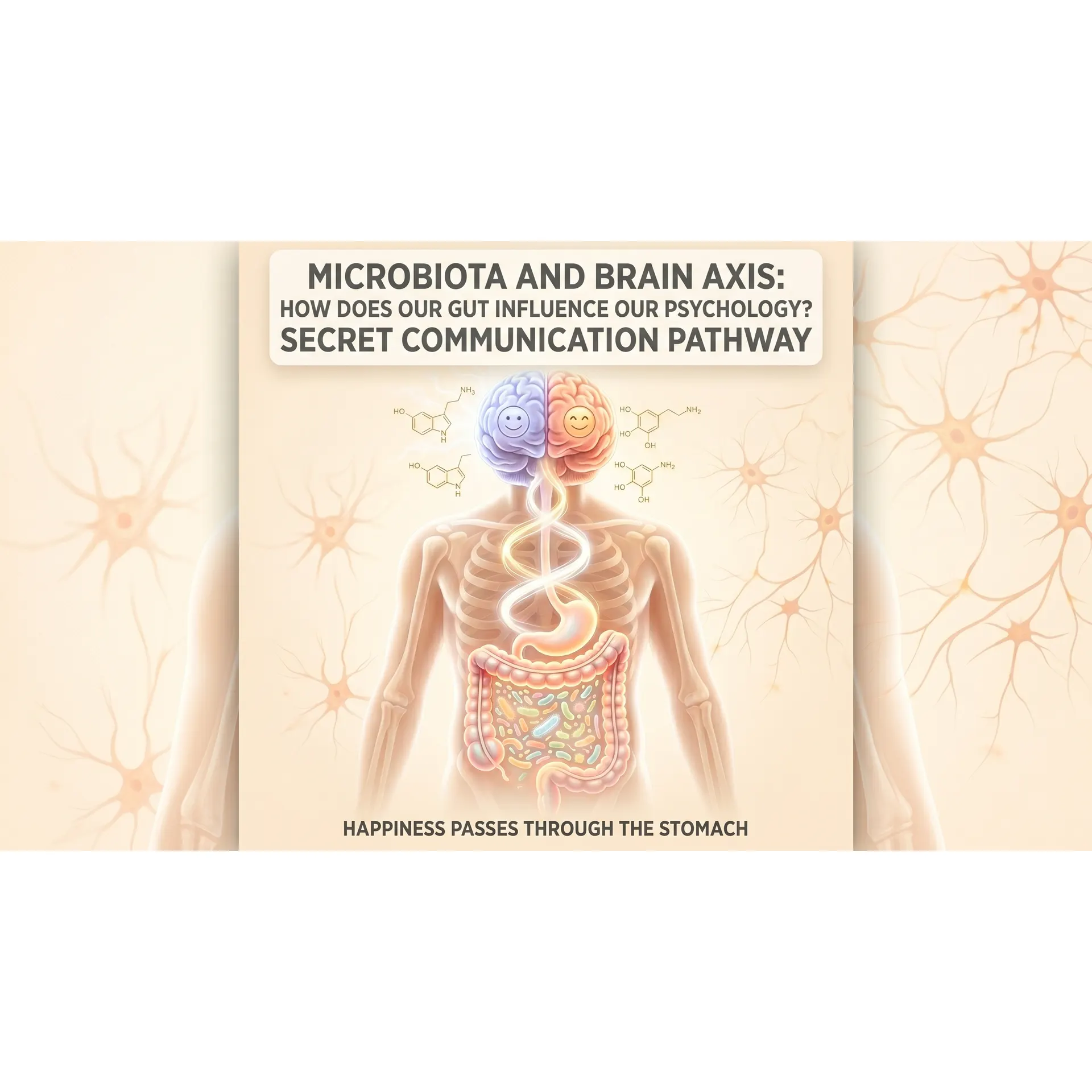
Have you ever felt "butterflies in your stomach" right before a major exam or a critical job interview? Or perhaps, on an incredibly stressful and exhausting day, you suddenly found yourself standing in front of the kitchen pantry, craving sugary, high-carb comfort foods?
Most of us assume these sensations and impulses begin and end entirely within our heads. However, breakthroughs in modern biology and neuroscience reveal that this communication is actually a massive, bidirectional superhighway. At one end of this highway is the brain inside our skull, and at the other end sits our "second brain"—the gut.
Our gastrointestinal tract is home to a bustling community of trillions of microorganisms known collectively as the gut microbiota. These tiny microscopic guests do far more than just digest the food we eat; they actively shape our emotions, influence our daily decisions, regulate our anxiety levels, and can even alter our core personality traits. Let’s dive deep into this fascinating, hidden connection between our gut and our psychological well-being.
The Second Brain: The Enteric Nervous System
Embedded within the very walls of our intestines lies an extensive neural network consisting of roughly 100 to 500 million neurons. Structurally, this network is so strikingly similar to the tissue found in our head that scientists call it the Enteric Nervous System (ENS). This "gut brain" is capable of making independent decisions, managing complex digestive processes, and producing its own chemical messengers entirely on its own, without waiting for commands from the central nervous system.This is where the direct link to psychology reveals itself: serotonin, the primary neurotransmitter responsible for feelings of happiness, calm, and emotional stability, has about 90% to 95% of its supply manufactured in the gut, not the brain! Similarly, about half of the body's dopamine—the chemical driving reward and motivation—is gut-derived. The ultimate directors controlling the quantity and quality of these essential neurochemicals are the bacteria living in our gut.
How the Gut and Brain Talk to Each Other (The 3 Secret Channels)
To make their voices heard by the brain upstairs, our gut bacteria utilize three primary communication channels:- The Vagus Nerve: A Direct Telephone Line
- Short-Chain Fatty Acids (SCFAs)
- Immune System Signaling
How Gut Bacteria Manipulate Our Mental State
To demonstrate the profound impact of the microbiome on psychology, scientists have conducted remarkable experiments, most notably using "Germ-Free" (GF) mice—animals raised in completely sterile environments with no bacteria in their guts.These germ-free mice displayed incredibly high levels of anxiety, behaved antisocially, and showed exaggerated physiological responses to stress compared to normal mice. Even more astonishingly, when fecal microbiota samples taken from human patients diagnosed with clinical depression were transplanted into these germ-free mice, the mice quickly became withdrawn and began exhibiting depressive behaviors. This serves as some of the strongest evidence that depression and anxiety are not just purely mental conditions, but can be driven by a disrupted microbiome.
Psychobiotics: Friendly Bacteria for Mental Health
The discovery of the microbiota-brain axis has introduced a revolutionary paradigm to psychiatry and neurology: Psychobiotics.Psychobiotics are specific, live bacterial strains (most notably from families like Lactobacillus helveticus and Bifidobacterium longum) that, when ingested in adequate amounts, optimize the gut flora to directly alleviate symptoms of depression and anxiety. In the near future, it is highly likely that psychiatric prescriptions will be routinely paired with personalized microbiome diets and targeted probiotic protocols.
How to Nurture Your Gut to Protect Your Mind
If you want to calm your mind, ease anxiety, and boost your overall mood, the most effective place to start is in your kitchen by feeding the trillions of tiny helpers in your gut:Eat Abundant, Diverse Fiber (Prebiotics): Fiber is your bacteria's absolute favorite food. Fuel your friendly microbes with prebiotic-rich foods like artichokes, asparagus, garlic, onions, leeks, oats, and legumes. The more diverse your diet, the more diverse and resilient your microbiome becomes.
Embrace Fermented Foods: Incorporating traditional fermented options like kefir, unsweetened live yogurt, kombucha, and sauerkraut directly introduces live, beneficial probiotic strains into your digestive ecosystem.
Eliminate Processed Sugars: Refined sugars and artificial sweeteners act as a toxin to friendly gut bacteria while rapidly feeding opportunistic pathogens and fungi (like Candida). This shift significantly increases negative inflammatory signaling to the brain.
Proactively Manage Stress: Remember, the superhighway goes both ways. Severe psychological stress releases cortisol, which damages the gut lining and alters microbial balance. Practices like meditation, walking in nature, and deep diaphragmatic breathing stimulate the vagus nerve, sending a calming signal back down to the gut.
Conclusion: Happiness is a Gut Feeling
We can easily update the age-old proverb "The way to a man's heart is through his stomach" using the lens of modern science: "The path to mental peace runs through the gut."If you are struggling with your mental health and feel isolated, exhausted, or stuck in a loop of negative thoughts, stop blaming your willpower alone. It is highly possible that the trillions of tiny microscopic companions in your gut are simply starving, stressed, or out of balance. Nourish them, diversify them, and take care of them—because when your gut bacteria are at peace, your mind will naturally follow.
References
- Cryan, J. F., & Dinan, T. G. (2012). Mind-altering microorganisms: the impact of the gut microbiota on brain and behaviour. Nature Reviews Neuroscience, 13(10), 701-712. https://doi.org/10.1038/nrn3346
- Dinan, T. G., Stanton, C., & Cryan, J. F. (2013). Psychobiotics: a novel class of psychotropic. Biological Psychiatry, 74(10), 720-726. https://doi.org/10.1016/j.biopsych.2013.05.001
- Mayer, E. A., Tillisch, K., & Gupta, A. (2015). Gut/brain connections in health and disease. Nature Reviews Neuroscience, 16(8), 438-449. https://doi.org/10.1038/nrn3964
- Foster, J. A., & McVey Neufeld, K. A. (2013). Gut–brain axis: how the microbiome influences anxiety and depression. Trends in Neurosciences, 36(5), 305-312. https://doi.org/10.1016/j.tins.2013.01.005
No comments yet. You can leave the first one.